How Online Schools Are Changing Education Worldwide
Key Takeaways:
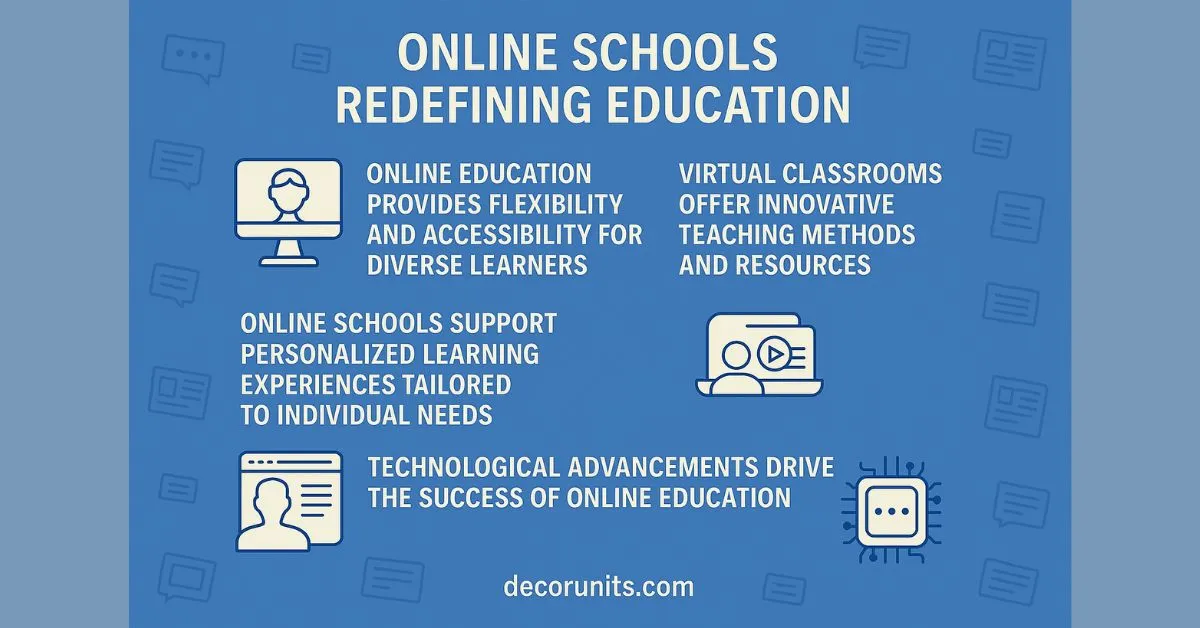
- Online education provides flexibility and accessibility for diverse learners.
- Virtual classrooms offer innovative teaching methods and resources.
- Online schools support personalized learning experiences tailored to individual needs.
- Technological advancements drive the success of online education.
Online schools are revolutionizing global education by breaking traditional barriers and making learning more accessible. They offer flexibility to students from anywhere, accommodating diverse needs and learning styles. This shift emphasizes personalized instruction, real-time collaboration, and expanded curricular options. Online schools open new pathways to academic success in regions with limited access to quality education. As more institutions adopt virtual models, online education redefines learning in a connected world.
Online education is at the forefront of a sweeping change in the educational landscape, transcending traditional barriers through digital innovation. It offers a paradigm shift that democratizes access to learning, making it possible for students from all walks of life to receive a high-quality education. With virtual platforms, boundless resources are at students’ fingertips, and they can engage with curricula tailored to their needs. One such opportunity is available to learners in Virginia who can explore diverse educational pathways here. This inclusivity has profound implications, as it empowers students to craft an educational journey uniquely on their own, fostering independence and self-directed learning.
The Rise of Virtual Classrooms
Virtual classrooms have catalyzed a revolution in educational methodologies, sweeping away the time and space constraints inherent in traditional schooling. By utilizing innovative digital tools, these platforms offer an interactive learning environment, and students can engage more deeply. Online education allows students to participate in global classrooms, enriching learning through exposure to diverse perspectives and multicultural discussions. This digital shift leads the charge towards a more inclusive education system where every voice can be heard, regardless of geographic barriers. Students absorb knowledge and develop critical digital literacy skills crucial for thriving in an increasingly interconnected world.
Benefits of Online Learning
The benefits of online learning extend beyond the apparent convenience of flexibility and accessibility. It champions an approach that respects individual learning styles, allowing students to learn at a pace that suits their cognitive rhythms. This adaptability in scheduling translates into better retention and comprehension as students engage with materials under optimal conditions for productivity. Moreover, online platforms democratize education by eliminating the logistical limitations associated with traditional schooling, such as commuting and fixed class schedules. This convenience means that students balancing work or family commitments can still pursue and attain their educational goals, contributing to lifelong learning and career advancement opportunities.
Challenges and Solutions in Online Education
Despite its numerous advantages, online education presents challenges that must be navigated to maximize effectiveness and student satisfaction. Chief among these challenges is the potential for decreased engagement due to the lack of physical presence and interaction in virtual settings. Additionally, technological hiccups can disrupt the learning experience and impact student outcomes. Educators are deploying various interactive tools and strategies to address these issues and maintain student interest and participation. These include multimedia content, real-time communication platforms, and collaborative projects that mirror the interpersonal dynamics of traditional classrooms. By fostering an environment that encourages interaction and creativity, educators can mitigate the limitations of digital learning.
Technology’s Role in Virtual Learning
Modern technology is the linchpin that underpins the success of virtual learning, providing the structure and tools necessary for delivering a top-notch educational experience. The integration of sophisticated technologies such as artificial intelligence, virtual reality, and comprehensive learning management systems ensures that students receive an education that’s not only effective but also engaging. These advancements are scaling up the scope and scale of online education, quickly bridging any gaps between digital and traditional educational methods. By incorporating AI, students can benefit from personalized feedback and adaptive learning paths that respond dynamically to their progress and needs, which fosters a more supportive and customized learning experience.
How Online Schools Personalize Education
Personalization is at the heart of the online education revolution. It shifts the focus from a one-size-fits-all approach to one that considers each student’s unique abilities and challenges. Online platforms are equipped to offer a spectrum of options that tailor educational content and assessment methods to individual learning styles. This adaptive model encourages students to take ownership of their education, promoting greater engagement and motivation. Learners can access resources, engage with interactive content, and receive personalized feedback, enhancing their ability to master complex subjects and skills at their own pace. This level of personalization transforms the classroom into a space where each student is encouraged to flourish and explore their potential.
The Future of Online Education
As we look towards the future, the potential of online education is limitless. The synergy between traditional and digital education is paving the way for hybrid models that leverage the best of both worlds to create an enriched learning environment. Emerging technologies, such as blockchain for credentialing and virtual reality simulations, promise to deepen learning and provide new modalities for engagement. As institutions continue to integrate these innovations, online education will become even more accessible, inclusive, and effective in addressing the needs of diverse learners. The resultant educational landscape will be one of unprecedented opportunity, where knowledge is not bound by walls or time but seamlessly flows across the digital sphere, equipping a generation of learners to excel in a rapidly evolving global society.
Conclusion
In conclusion, online education is not merely an alternative to traditional schooling but a transformative force reshaping the education sector. By harnessing the power of digital platforms, online schools unlock opportunities for personalized, flexible, and inclusive learning experiences that cater to contemporary educational demands. As the global community continues to embrace these advancements, the future of education looks promising, with new horizons for students everywhere. This reshaped educational journey beckons learners to explore, innovate, and thrive in an environment that encourages curiosity, adaptability, and lifelong learning, ultimately leading to a well-informed and empowered society.












Post Comment