Drive Social Media Lawsuit: A Wake-Up Call for the Digital Marketing Industry
Introduction: Drive Social Media Lawsuit
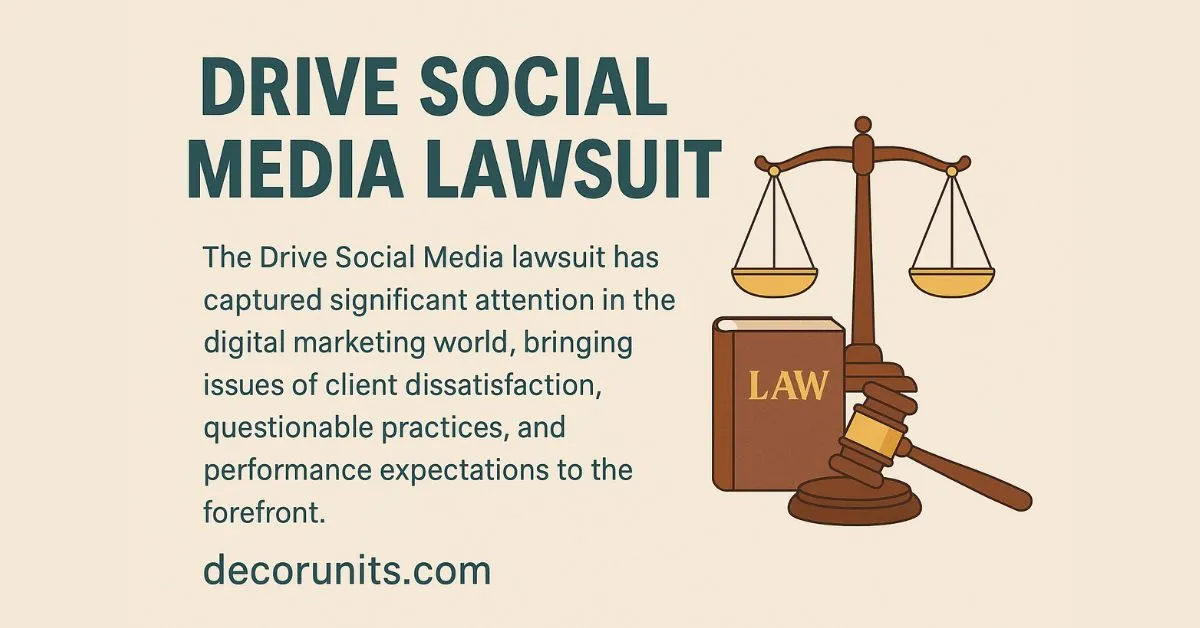
The Drive Social Media lawsuit has become a hot topic in the marketing world. It has triggered widespread discussion about agency accountability, client relations, and ethical practices. This case isn’t just about one agency—it’s a moment of reckoning for the entire digital marketing industry.
For businesses that rely on marketing agencies, this lawsuit is a reminder of how important transparency and clear deliverables are. In this post, we’ll explore what happened, the key allegations, how the industry is responding, and what small businesses can learn from it.
What Is Drive Social Media?
Background of the Company
Drive Social Media is a digital marketing agency with locations in St. Louis and Nashville. It focuses on social media advertising, especially on platforms like Facebook, Instagram, and YouTube.
Their Marketing Approach
The agency promotes itself as a growth-focused partner for small businesses, emphasizing performance-based marketing strategies.
Why the Lawsuit Is Important
Industry-Wide Implications
The Drive Social Media lawsuit highlights serious concerns about how agencies operate. It brings attention to the risks of vague contracts and performance guarantees.
Lessons for All Marketers
This case encourages digital marketers to revisit their client agreements, set clear expectations, and focus on ethical practices.
Key Allegations in the Lawsuit
Overpromising and Underdelivering
Clients claim the agency made strong ROI promises that were not fulfilled. For small businesses, these failed promises led to financial loss.
Lack of Transparency
Allegations include unclear billing practices and poor communication. Clients reportedly had little insight into where their money was going.
Rigid Contracts
Clients said they were locked into long-term contracts with limited exit clauses. This left many stuck in unproductive relationships.
The Role of Sales Tactics
High-Pressure Sales
Former clients mention aggressive sales tactics. These included flashy presentations and emotionally charged pitches to secure signatures.
Reality Check
Once the results didn’t match the sales pitch, clients found themselves unable to leave due to contract restrictions.
Drive Social Media’s Response
Denying Wrongdoing
Drive Social Media has publicly denied the allegations. They argue that outcomes vary and that many clients have seen success.
Blame on Expectations
The company maintains that the issue lies in client misunderstanding or mismanagement of expectations—not deception.
Trust and Accountability
Declining Confidence
This lawsuit is shaking client trust across the industry. Many businesses are questioning how much faith to place in marketing vendors.
Measuring Success
Businesses are now asking for clearer KPIs and more frequent progress updates to ensure campaign transparency.
What Small Businesses Can Learn
Key Takeaways
- Always review marketing contracts carefully.
- Ask direct questions about deliverables and performance metrics.
- Avoid long-term contracts until results are proven.
Build In Safeguards
Businesses should seek flexible agreements and request case studies before signing.
Legal and Ethical Impact
Legal Repercussions
If the agency is found guilty, this case could push the industry toward tighter regulation and legal standards for marketing contracts.
A Push for Reform
The case may lead to ethical reforms, especially in how contracts are structured and results are promised.
Industry Reactions
Competitors Weigh In
Other marketing agencies are using this opportunity to showcase their transparency and ethical approaches.
Thought Leadership
Experts are calling for new industry standards around accountability, metrics, and fair contract practices.
Reputation Management Through Social Media
The Ironic Twist
Social media, Drive’s area of expertise, is now fueling the backlash. Former clients and critics are using these platforms to share their experiences.
Amplified Voices
Negative reviews and viral posts have magnified the public perception of the lawsuit.
The Power of Reviews
Digital Word of Mouth
Google and Yelp reviews have played a major role in shaping the narrative. Common complaints echo those in the lawsuit.
Long-Term Impact
These reviews show how important consistent performance is in today’s reputation-driven market.
Preventing Future Disputes
Tips for Agencies
- Set realistic goals
- Be upfront about deliverables
- Offer regular updates
- Maintain clear communication
Tips for Clients
- Ask for proof of performance
- Request client references
- Negotiate fair terms and trial periods
A Turning Point for the Industry
Demand for Change
This case could be a catalyst for shifting the marketing industry toward client-first models.
Raise the Bar
If clients continue demanding transparency and accountability, agencies will be forced to evolve.
Final Thoughts
The Drive Social Media lawsuit serves as a warning to both agencies and businesses. It exposes the risks of overpromising, aggressive sales, and vague contracts. But more importantly, it’s a chance for the marketing industry to reset.
Agencies that focus on trust, results, and client satisfaction will thrive. Those that don’t may find themselves facing similar scrutiny.
FAQs
What is Drive Social Media being sued for?
Drive is accused of misleading clients, overpromising on ROI, and enforcing strict contracts that didn’t deliver results.
Is Drive Social Media still operating?
Yes, the company is still in business and has responded publicly to the lawsuit.
How can businesses avoid these problems?
Review contracts closely, ask for case studies, and start with short-term agreements.
Are lawsuits like this common in marketing?
They’re not frequent but do happen when expectations and results don’t align.
What’s the key takeaway from this case?
Transparency and honest communication are essential to avoid legal and financial risks in marketing relationships.