185.63.253.2pp: Meaning, IP Address Analysis, Security Risks
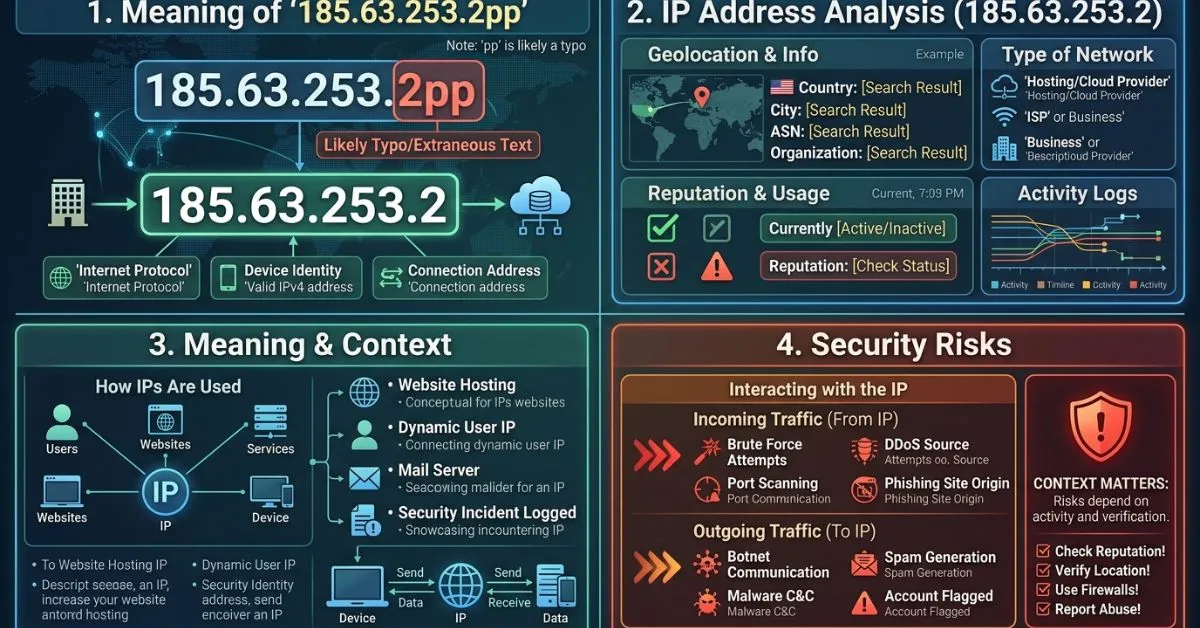
IP addresses are what make the internet work and let gadgets talk to each other. Users may sometimes notice address forms that aren’t what they seem to be. One example is 185.63.253.2pp is a term that has been appearing increasingly in security reports, server logs, and analytics tools. Many people look it up because they don’t know whether it’s a real IP address or something dangerous.
185.63.253.2pp looks like a normal IPv4 address at first glance. The extra letters at the end, though, make it different from a normal IP address. Website owners, bloggers, and system managers may not understand this strange format. They often want to know why this address shows up in their logs and if it means there was suspicious behaviour on the network.
What is an IP address? Understanding Internet Protocol Basics
Definition of an IP Address
An Internet Protocol address, or IP address, is a unique number that is given to each computer that is connected to the internet. It makes it possible for computers, servers, and cellphones to talk to each other. Things would not be able to send or receive data without IP numbers.
IP names are like home addresses in the digital world. They are responsible for telling the network where to send data. There is one on every website, computer, and server.
Types of IP Addresses
These are the two main kinds of IP numbers that are used on the web. IPv4 and IPv6 are these. They both help devices link, but they do so in different ways.
This kind of IP address is used most often. 185.63.253.2pp has four numbers with dots between them. There are 255 numbers in all.
IPv6 is a more recent form that can connect more devices. 185.63.253.2pp uses a longer string of letters and numbers. This format helps the rising number of people who use the internet.
IPv4 Address Structure and Format Rules
There are four numerical parts to an IPv4 address layout. There are dots between these parts. In this case, 192.168.1.1 is a real IPv4 address.
There are numbers from 0 to 255 that can be in each area. There can’t be any letters or other marks. To make sure the address fits the rules for IP address format, this rule is used.
If there are letters in the address, the style doesn’t work anymore. This is the reason why lines like 185.63.253.2pp make us think. They are not structured in the way that a normal IP address is.
185.63.253.2pp: Understanding Unusual IP Strings
Invalid or Modified Address Formats
Logs sometimes have IP-like lines that aren’t normal. There may be extra letters or symbols in these. Such comments often make website owners and administrators confused.
These changed names can happen because of scripts or mistakes in the formatting. In logs, they show up as strange IP activity.
Base IP Address Analysis
Getting rid of any extra characters shows the real IP address. An IPv4 address like 185.63.253.2 is allowed. This is the part that computers and websites can see.
Often, the extra letters don’t change how connections work. They might just be bots or tracking tools leaving marks.
Possible Reasons for Extra Characters
Logging mistakes may show up as extra letters or endings. Automated scripts sometimes change identifiers.
Bot traffic may also use strange IP forms to avoid detection. Analytics tools may show wrong data from time to time.
Why Strange IP Strings Appear in Logs
Appearance in Server Logs
Servers record every visitor for tracking purposes. Occasionally, unusual strings like modified IP addresses show up.
These entries may result from formatting issues or bot-generated traffic. Monitoring logs helps identify whether it’s harmless or suspicious.
Appearance in Analytics Tools
Website analytics track traffic patterns and IP addresses. Sometimes analytics software displays non-standard IP entries.
Errors in processing raw traffic data can lead to extra characters appearing. Bots or testing scripts may also be responsible.
Security System Alerts
Firewalls and security systems flag unusual IP behaviour. Modified or strange IP strings may trigger alerts.
While some alerts indicate potential threats, many are harmless. Proper network traffic analysis clarifies the situation.
Script or Malware Manipulation
Some scripts alter IP data before it reaches servers. This process can add extra letters to valid IP addresses.
Malicious bots may intentionally disguise their IPs. Regular monitoring ensures early detection of such activity.
Is Strange IP Traffic Dangerous?
Possible Threats
Some unusual IP entries may indicate automated attacks. Bots can scrape content or attempt login breaches.
Repetitive access to sensitive areas may signal brute-force attempts. Monitoring traffic helps detect these issues early.
When It’s Harmless
Not all unusual entries are dangerous. They can result from logging errors or analytics glitches.
Testing scripts may also create such entries. This makes the traffic appear unusual without being harmful.
How to Evaluate the Risk
Check the frequency and type of requests from the IP. Repeated requests to sensitive pages can indicate risk.
Use security tools to verify IP reputation. This helps distinguish between harmless and malicious traffic.
Investigating Suspicious IPs
IP Lookup Tools
Use IP lookup tools to check the real IP behind a modified string. These tools provide hosting, location, and network information.
They help identify potential threats quickly. This is a first step in suspicious IP investigations.
WHOIS Lookup
WHOIS tools show the registered owner of an IP. It provides organisational and network details.
This helps trace the source of traffic and assess risk. Large hosting providers may obscure exact ownership.
Reverse DNS Lookup
Reverse DNS reveals if an IP is associated with a domain. This identifies whether it belongs to a known website or service.
It helps detect automated traffic from unknown sources. Combined with other tools, it clarifies the purpose of the IP.
IP Geolocation
Geolocation tools provide approximate location data. They show the country, region, or city linked to the IP.
This helps understand the origin of traffic. Combined with logs and other tools, 185.63.253.2pp supports malicious IP detection.
Signs of Malicious IP Activity
Repeated Requests
Multiple requests from the same IP may indicate bot activity. Repeated access can overload the server.
Monitoring logs allows early detection. Patterns help identify potential threats.
Traffic Spikes
A sudden spike in traffic from a single IP is suspicious. Bots often create these spikes.
Comparing with normal traffic helps determine whether it is harmful.
Access to Sensitive Files
Frequent attempts to reach login pages or admin areas are red flags. Malicious users often target these areas.
Checking the pages accessed is key. This helps with early malicious IP detection.
Unusual Behavior Patterns
Some IPs change user agents or access patterns unexpectedly. This can indicate automated or hidden activity.
Analysing logs regularly helps spot these anomalies. Proper monitoring strengthens network security.
How to Check Suspicious IPs
Online Reputation Tools
Use IP reputation tools to check whether an IP has been reported for spam or attacks.
These tools provide a quick way to check for suspicious activity.
Blacklist Checks
Check if the IP appears on spam or malware blacklists.
Blacklisted IPs are safer to block. Regular checks help maintain security.
Server Log Monitoring
Review server logs for repeated or unusual requests.
Patterns in logs reveal potential threats. Regular monitoring is crucial for network traffic analysis.
Combining Tools
Use IP lookup, WHOIS, reverse DNS, and geolocation together.
This provides a full picture of the IP’s behaviour. It improves malicious IP detection.
How to Block Suspicious Traffic
.htaccess Rules
Block IPs via the .htaccess file. Add deny rules to prevent access.
This works for single IPs or ranges. It is quick and effective.
Firewall Protection
Firewalls filter traffic and block suspicious IPs.
They prevent repeated attacks and protect servers.
Security Plugins
CMS security plugins detect and block unusual IPs.
They simplify website protection and automate defenses.
Best Blocking Practices
Monitor IPs before blocking. Some may be harmless.
Combine multiple methods for strong website security monitoring.
Best Practices for Website Security
Regular Log Monitoring
Check server logs frequently. Detect repeated requests or unusual formats.
Early detection helps prevent threats.
Software Updates
Keep CMS, plugins, and servers updated.
Updates patch vulnerabilities and strengthen security.
Strong Passwords
Use unique, strong passwords.
This prevents brute-force and unauthorized access.
Web Application Firewalls
A WAF filters malicious requests.
185.63.253.2pp blocks bots and suspicious traffic automatically.
Team Education
Train your team to recognize unusual IPs.
Awareness reduces accidental security risks.
What To Do If You See Strange IP Entries
Stay Calm and Investigate
Not every unusual string is dangerous. Investigate frequency and access patterns.
Determine whether traffic is normal or suspicious.
IP Lookup and Analysis
Use lookup, WHOIS, and geolocation tools.
Identify the source of traffic and potential risk.
Monitor Activity
Check for repeated requests to sensitive areas.
Frequent activity may require action.
Blocking if Necessary
Use .htaccess, firewalls, or security plugins to block harmful IPs.
Document your actions for future reference.
Conclusion
Unusual IP strings with extra characters are common. 185.63.253.2pp The base IP may be valid, but suffixes often indicate errors or bot activity. Some unusual entries are safe. Proper analysis helps determine the risk. Use lookup tools, monitor logs, and block malicious IPs if needed. Update software, use strong passwords, enable firewalls, and educate your team. Regular monitoring keeps your website safe from modified IP traffic and suspicious activity.
FAQs
What is a modified IP string?
It is an unusual IP-like entry that may include extra letters or symbols.
Is it a real IP address?
The base part is valid, but added characters make it invalid.
Why does it appear in logs?
Logging errors, bot traffic, or analytics glitches are common reasons.
Is it dangerous?
Not always, but repeated access to sensitive pages may indicate risk.
How to block it?
Use .htaccess, firewalls, or security plugins. Monitor logs and check IP reputation.
How to investigate?
Use IP lookup, WHOIS, reverse DNS, geolocation, and log analysis.















Post Comment